Asbestos Insulation Removal Loft, Pipe & Board
Old asbestos insulation is one of the highest-risk materials in any pre-2000 property, loose-fill, board, or pipe lagging that releases fibres the moment it’s disturbed. It’s not a job for a general handyman.
We provide asbestos insulation removal London relies on for lofts, boilers, water tanks, and commercial plant rooms, carried out by licensed asbestos insulation removal teams from start to finish.
- HSE Licensed
- Fully Insured
- Free Quote
- Same-Week Availability
- Licensed Waste Disposal
- Emergency Callout Available
- Free site inspection with every asbestos insulation removal quote
Get your free quote
Quick form we usually reply the same working day.
- No obligation. Your details stay private.
Accredited & compliant
- HSE Licensed
- UKATA Certified
- UKAS Labs
- Fully Insured
- 20+ Years
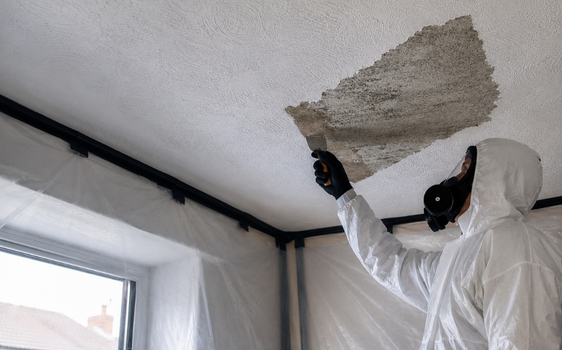
Why It Matters
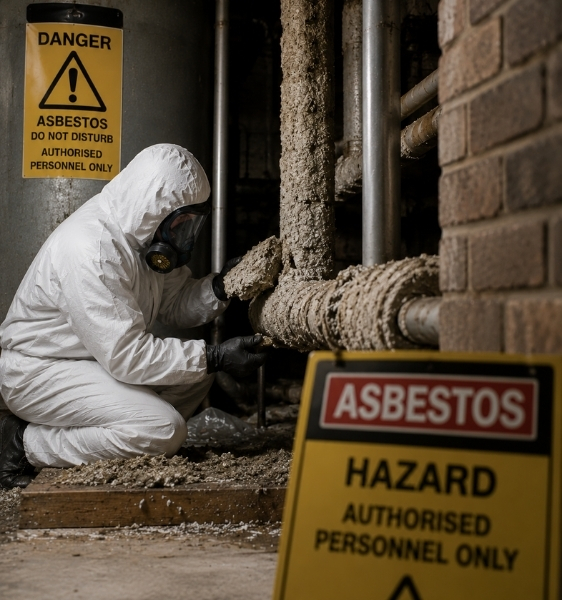
What Is Asbestos Insulation and Why Does It Need Professional Removal?
Asbestos insulation
was widely used for its fire resistance and heat-blocking properties, appearing as loose-fill in lofts, sprayed coatings on structural steel, board lining, and lagging around pipes and boilers .
Where it's found
loft spaces, boiler rooms, around pipework, water tank lagging, and structural fire protection in older commercial buildings.
Why it's dangerous
loose-fill and lagging are among the highest-risk forms of asbestos, since fibres release easily even with minimal disturbance.
When removal is required
any confirmed loose-fill, board, or lagging material that's damaged, deteriorating, or due to be disturbed by other work.
When testing is required
before any loft clearance, plumbing work, or boiler replacement in a pre-2000 property.
Types We Remove
Loose-Fill Loft Insulation
High-risk asbestos fibre packed into loft spaces, requiring full containment removal.
Asbestos Insulation Board (AIB)
Is used for fire protection and partitioning, a common source of the search term asbestos insulation board removal.
Pipe & Tank Lagging
Asbestos wrapping around pipework and water tanks, removed under controlled conditions.
Asbestos Roof Insulation
Fitted beneath roof sheeting, removed alongside or separately from roof work.
Sprayed Coatings
Fire protection coatings on structural steel, most common in older commercial buildings.
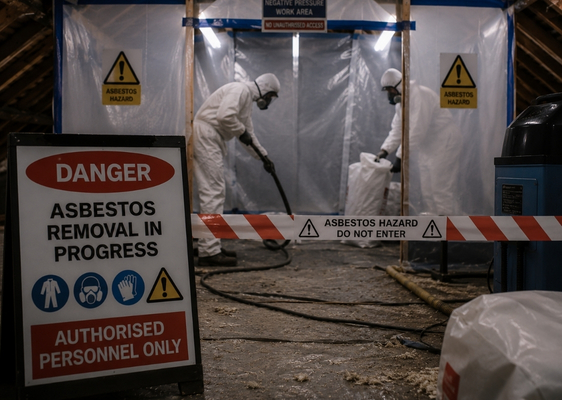
Health & Safety
- Full enclosure and negative-pressure containment for loose-fill and board removal
- Respiratory protection rated for high-fibre-release environments
- Wetting-down procedures to suppress airborne fibres during removal
- Sealed, double-bagged waste at every stage
- Independent air clearance testing before sign-off
Our Insulation Services
Popular
Loft Insulation Removal
Full containment removal of loose-fill asbestos insulation from loft spaces, with independent clearance testing.
Pipe & Boiler Insulation Removal
Safe removal of lagging and board insulation around pipework and boilers, minimising disruption to your heating system.
Asbestos Insulation Board Removal
Removal of AIB partitioning and fire protection boarding, common in older extensions and commercial units.
How Our Process Works
Insulation Survey & Assessment
A surveyor inspects loft, pipe, or board insulation and takes samples for laboratory analysis where the material can't be confirmed visually. Given how high-risk insulation materials can be, this step is never skipped, even for small-looking jobs.
Assessment & Quote
We prepare a written method statement reflecting the specific containment level the material requires, plus a transparent quote. Loose-fill and board removal are priced differently given their different handling requirements.
Safe Removal & Containment
Full enclosure or localised containment is set up depending on material type, with wetting-down procedures used to suppress fibre release during removal. Our team works under continuous air monitoring throughout.
Licensed Disposal & Documentation
Waste is double-bagged, labelled, and transported to a licensed facility, with a waste transfer note issued. Independent clearance testing confirms the area is safe before we hand it back.
Why Choose a Licensed Insulation Removal Team?
| Feature | Pro Asbestos Removal | Unlicensed Contractors |
|---|---|---|
| HSE Asbestos Licence | ✓ Yes | ✕ Often not held |
| Full Enclosure Containment | ✓ Standard for insulation | ✕ Rarely provided |
| Air Monitoring During Work | ✓ Continuous | ✕ Rarely offered |
| Licensed Waste Transfer | ✓ Documented | ✕ Often undocumented |
| Clearance Certification | ✓ Independent | ✕ Rarely offered |
How Much Does It Cost?
Areas We Cover
Trusted across the South East
★★★★★
26 verified Google reviews
I recently purchased a late-1950s 3-bed maisonette riddled with asbestos in the flooring of every room. The team quoted quickly, worked fast, did an amazing professional job and left the property immaculate. I couldn’t ask for more.
- Verified
Savanna Stephenson
South London · Apr 2026
Very professional and reliable service. The team arrived on time, worked efficiently, and made sure everything was safe and spotless before leaving. I would definitely use them again and highly recommend.
- Verified
Ahmad Sharif Amiri
Surrey · Apr 2026
Removed the asbestos garage roof safely
and efficiently. The team managed the
project with great care, ensuring the surrounding area was fully protected. Their attention to safety gave me complete peace of mind.
- Verified
Ma Gfv
Surrey · Apr 2026
Frequently Asked Questions About Asbestos Insulation Removal
How much does asbestos insulation removal cost?
Cost depends heavily on material type, since loose-fill removal requires full enclosure while board or lagging removal can sometimes be handled with localised containment. Quantity, loft or pipework access, and disposal weight all affect the final figure too. We provide a written quote after a free site inspection and, where needed, laboratory testing, so pricing reflects your specific insulation rather than a generic estimate.
How long does asbestos insulation removal take?
Is asbestos loft insulation dangerous?
Do I need a licensed contractor for insulation removal?
Can I remove asbestos pipe lagging myself?
Is asbestos insulation board (AIB) removal covered by regulations?
Does home insurance cover asbestos insulation removal?
How do I know if my loft insulation contains asbestos?
Do you offer emergency asbestos insulation removal?
What's the difference between asbestos board and loose-fill insulation?
Loft, pipework, or boarding get it identified and removed safely.
- Free Site Inspection
- Free Quote
- Same-Week Availability
- Licensed Experts